Pollution It is not just fuel that can be a pollutant, lubricating oils and coolants are extremely generally toxic and not only harmful to people but the environment also. Waste vehicle coolant may contain heavy metals such as lead, cadmium and chromium in high enough levels to make it a regulated hazardous waste. This makes it necessary for antifreeze to be recycled rather than disposed of down drains or similar, which can be illegal (epa.gov). Waste oil must also be disposed of at recognised oil banks. This is as oil can cause extreme environmental harm with only a small amount, because of the way it spreads, even a small quantity of oil can cause a lot of harm, 10 litres of oil can completely cover the surface of a one hectare lake (environment-agency.gov.uk). Data is available for all harmful substances on data sheets. These contain the hazard identification, first aid measure, fire fighting measures, accident release measures, handling and storage and more. Examples are shown below. A different form of pollution is noise. This is one of the largest growing concerns in the developing world with noise pollution being something that can be subjective depending on the person, and the environment in which the noise is occurring. The Motorsport Association (MSA) states; “. The reason for Silencing (SOUND CONTROL) is to reduce environmental impact and to keep Motor Sport running. Environmental Protection legislation has increased the pressure on activities generating noise and Local Authorities have the power to suppress any noise source deemed to be causing a nuisance. Our system of control is acceptable to most Environmental Bodies and must be considered as part of eligibility to compete in events.” (MSA Bluebook, 2011). Sound readings are taken with a decibel meter with measurements made at 0.5m from the end of the exhaust pipe with the microphone at an angle of 45° with the exhaust outlet and at a height of 0.5 to 1.0m above the ground (MSA Bluebook, 2011). The main factor of the noise output being the vehicle exhaust, vehicles are allowed to run with additional silencers on test days where the noise limits are lower than the championship noise regulations. Depending on circuit location, noise curfews may also be present.
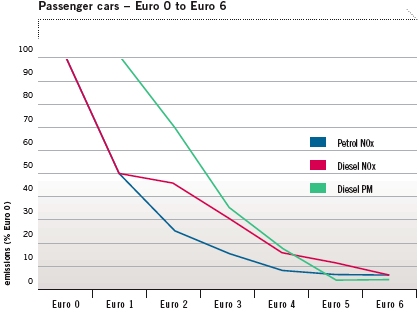 image from acea.be |
 image from uel.ac.uk Emissions Regulations Emissions from diesel vehicles: · carbon monoxide: 500 mg/km; · particulates: 5 mg/km (80% reduction of emissions in comparison to the Euro 4 standard); · nitrogen oxides (NOx): 180 mg/km (20% reduction of emissions in comparison to the Euro 4 standard); · combined emissions of hydrocarbons and nitrogen oxides: 230 mg/km. Emissions from petrol vehicles or those running on natural gas or LPG: · carbon monoxide: 1 000 mg/km; · non-methane hydrocarbons: 68 mg/km; · total hydrocarbons: 100 mg/km; · nitrogen oxides (NOx): 60 mg/km (25% reduction of emissions in comparison to the Euro 4 standard); · particulates (solely for lean burn direct-injection petrol vehicles): 5 mg/km (introduction of a limit that did not exist for the Euro 4 standard). In the case of vans and other light commercial vehicles intended for goods transport, the Regulation includes three categories of emission limits, depending on the reference mass of the vehicle: under 1 305 kg, between 1 305 kg and 1 760 kg, and over 1 760 kg. The limits that apply to the last of the three categories also apply to goods transport vehicles (category N2). Euro 6 Standard All vehicles equipped with a diesel engine will be required to substantially reduce their emissions of nitrogen oxides as soon as the Euro 6 standard enters into force. For example, emissions from cars and other vehicles intended to be used for transport will be capped at 80 mg/km (an additional reduction of more than 50% compared to the Euro 5 standard). Combined emissions of hydrocarbons and nitrogen oxides from diesel vehicles will also be reduced. These will be capped at, for example, 170 mg/km for cars and other vehicles intended to be used for transport (europa.eu). |

